
If an Information Security Management System is built on the wrong assumptions, everything that follows becomes weaker. Risks get misjudged, controls end up in the wrong places, and decisions about scope start to feel arbitrary. That is why Chapter 4 carries so much weight. Before you can do anything else in ISO 27001, you need to understand the environment your ISMS is going to operate in, who has a stake in it, what it actually covers, and how the management system itself is structured. Clauses 4.1 through 4.4 walk you through each of those steps.
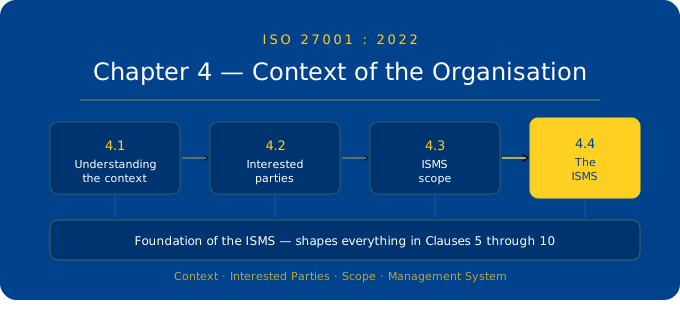
In practical terms, Clause 4 is really asking a handful of fundamental questions. What kind of organisation are we? What internal and external conditions shape our security needs? Who expects something from us, and what do they expect? What is inside the ISMS, and what sits outside it? Until those questions have honest answers, the rest of the standard cannot be applied in any meaningful way. ISO 27003 makes the point clearly: this analysis helps determine scope, supports risk and opportunity planning, and keeps the ISMS aligned with conditions that will inevitably change over time.